

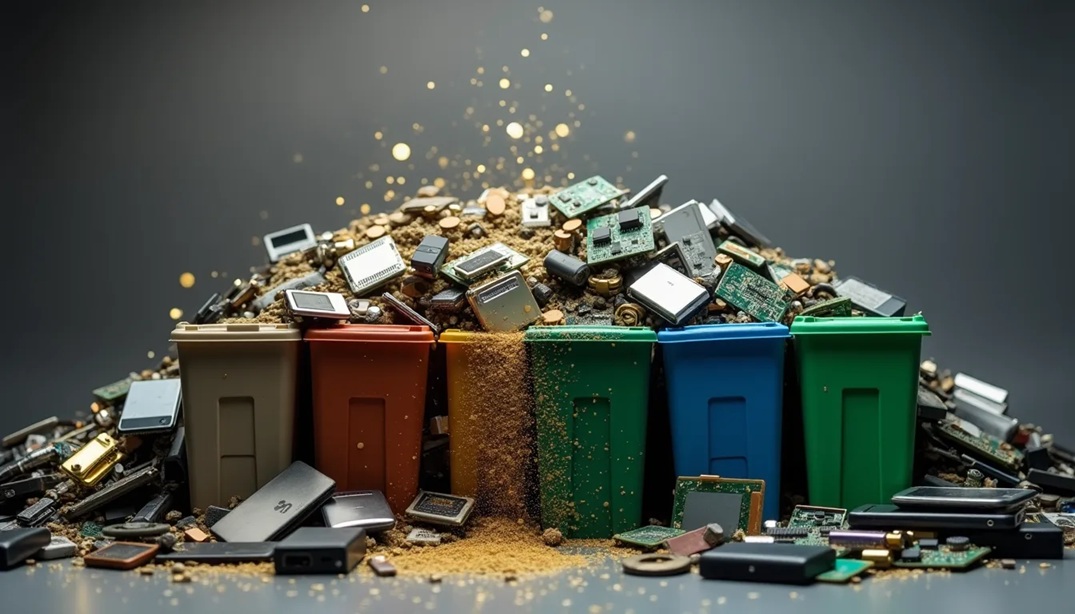
The peculiar challenge of e-waste recycling lies in the fact that the very devices that have made our lives immeasurably more convenient are, in their afterlife, remarkably inconvenient to dispose of properly. We carry supercomputers in our pockets, stream entertainment through televisions thinner than picture frames, and automate our homes with gadgets our grandparents would have considered science fiction, yet when these marvels inevitably fail or become obsolete, most of us have only the vaguest notion of what to do with them. This gap between our enthusiasm for acquiring electronics and our befuddlement about discarding them represents one of the more conspicuous contradictions of modern life.
The Scope of the Problem
If you were to gather all the electronic waste humanity produces in a single year, you would have a pile weighing roughly the same as all the commercial aircraft ever built. This is not a metaphor but an actual equivalency. We are, in effect, discarding the equivalent of the global aviation fleet annually, except that planes are designed to last decades whilst our phones are designed to be replaced every few years.
The composition of this waste is equally remarkable. Each device contains a sort of periodic table in miniature: copper and gold, silver and palladium, along with less savoury elements like lead, mercury, and cadmium. “Electronic waste is simultaneously the most valuable and most toxic waste stream we produce,” one materials scientist observed, and this duality defines the entire challenge of e-waste recycling.
What Actually Counts as E-Waste
The category proves broader than most people initially suppose. During conversations about e-waste recycling, I have noticed a common pattern: people immediately think of phones and computers but overlook the dozens of other electronic items scattered throughout their homes.
This includes smartphones and tablets, laptops and desktop computers, televisions and monitors, kitchen appliances with digital displays, audio equipment and speakers, gaming consoles and controllers, electric toothbrushes and razors, power tools and garden equipment, lighting fixtures with electronic components, and even some children’s toys. If it beeps, glows, or requires charging, it likely qualifies as e-waste.
How the System Works
The infrastructure for e-waste recycling has evolved considerably over the past decade, though unevenly across different regions. In Singapore, where land scarcity focuses attention on waste management, a network of collection points has spread throughout the island:
- Public collection bins positioned in housing estates and community centres accept small electronics and batteries
- Retail take-back programmes allow consumers to return old devices when purchasing new ones
- Specialized collection events focus on larger items like televisions, air conditioners, and refrigerators
- Licensed recyclers operate facilities capable of processing everything from mobile phones to industrial equipment
- E-waste collection programmes in schools and workplaces capture institutional waste streams
The variety of options reflects a pragmatic understanding that different people respond to different incentives and opportunities. Convenience matters as much as environmental concern in determining whether electronics enter proper recycling channels.
Preparing Devices for Disposal
Before surrendering any electronic device to the recycling stream, several preparatory steps prove essential. The most critical involves data security. Factory resets eliminate most personal information, but truly sensitive devices merit additional measures. Remove SIM cards and memory cards. Sign out of all accounts. For devices containing confidential information, consider professional data destruction services that physically destroy storage components.
Battery removal, where feasible, simplifies the recycling process as batteries require separate handling due to their chemical composition. Basic cleaning makes devices easier to handle and process.
The Economics of Recovery
One of the more intriguing aspects of e-waste recycling involves the economics of material recovery. Modern electronics contain minute quantities of precious metals that, when aggregated across millions of devices, represent substantial value. A tonne of circuit boards yields more gold than a tonne of mined ore. This economic reality underpins the entire recycling industry.
Yet the economics cut both ways. Devices designed without recycling in mind, with glued components and proprietary fasteners, increase processing costs and reduce recovery rates. “We could recycle far more effectively if products were designed for disassembly,” one recycling facility manager noted, highlighting how design choices determine what happens in recycling plants.
The Repair Imperative
Perhaps the most elegant solution to e-waste recycling is to avoid creating e-waste in the first place. Repairing rather than replacing devices extends their lifespan and postpones their entry into the waste stream. A cracked screen, depleted battery, or malfunctioning button need not spell the end of a device’s useful life.
The repair economy, once ubiquitous, has contracted as devices have become simultaneously more sophisticated and more difficult to fix. Right-to-repair movements now push back against this trend, arguing that consumers should retain the ability to repair what they own.
Making It Simple
The complexities of e-waste recycling need not overwhelm individual action. Start by identifying the nearest collection point and noting what items they accept. Schedule disposal alongside other errands to minimize inconvenience. Keep a designated box for accumulating small electronics rather than letting them scatter throughout drawers and cupboards.
The transformation of our relationship with electronic devices, from acquisition to disposal, represents a necessary evolution in environmental consciousness. We have mastered the art of manufacturing and consuming electronics. Now we must master the humbler but equally essential art of ensuring that when these devices reach the end of their utility, they contribute to rather than detract from a sustainable future through proper e-waste recycling.
