

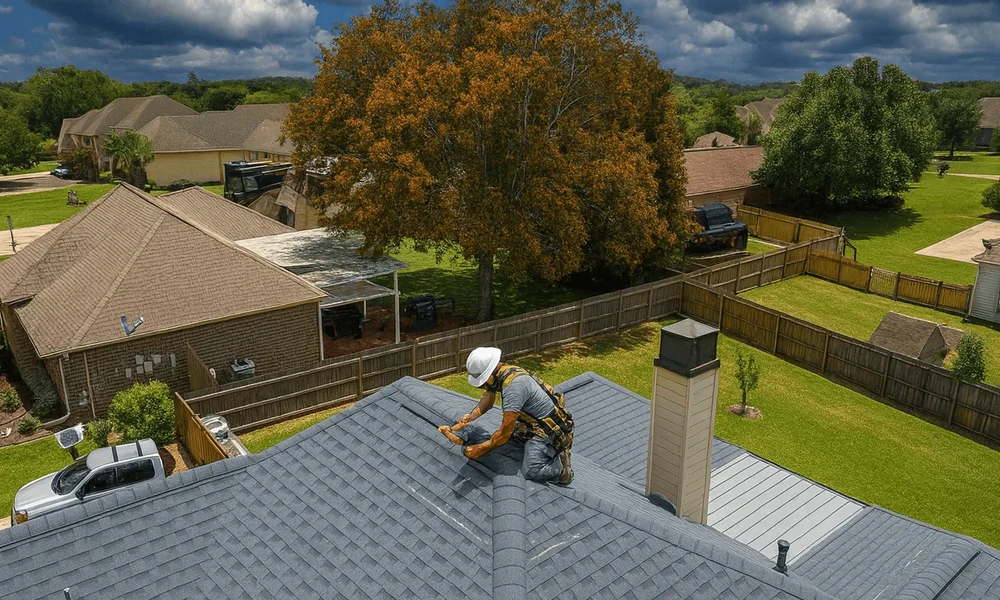
Every June, my neighbor Roy does the same thing. He walks his roof line with a clipboard, writes “looks fine” on it, and goes back inside. Then a feeder band rolls through in August and he’s on the phone at 6 a.m. with a stranger from a truck with an out-of-state plate.
You don’t want to be Roy. The window between February and May is when the smart money in Louisiana gets its roof questions answered, because after a named storm hits, your choices shrink fast. Crews get booked, material prices climb, and every fly-by-night operator in three states shows up with a clipboard and a business card. The homeowners who come out ahead are the ones who did their homework months earlier, which is where a short list of trusted Louisiana residential roofing services makes all the difference.
Here’s the honest part most people skip: vetting a roofer isn’t about finding the cheapest bid. It’s about finding out who will actually answer the phone after the storm, who understands how this state’s building codes treat wind exposure, and who won’t vanish with your deposit. I’ll walk you through a framework I call the Storm Window Audit, built around four checkpoints: paperwork, people, product, and performance. Run it once and you’ll spot a weak bidder in about fifteen minutes.
Why the off-season is the right time to lock in a contractor
During calm months, a good contractor has room in the schedule and time to walk you through options. After a big storm, the same company is triaging hundreds of calls and the good crews are committed for months. Roofing contractors in Louisiana residential roofing services desks will tell you the same thing if you ask directly: the jobs they do their best work on are the ones where nobody was panicking.
So start your search early. Get recommendations from neighbors whose roofs have survived a storm or two, check with your local builders’ association, and pull verification on any candidate before you ever discuss price.
Checkpoint one: the paperwork trail
This is the step homeowners skip because it feels bureaucratic. It’s also the fastest way to eliminate someone who will cause you real pain later.
- State licensing. Confirm the contractor holds the residential license your parish or the state requires for the scope of work. Ask for the license number and verify it yourself rather than trusting a logo on a truck.
- Insurance certificates. Request a certificate of insurance for general liability and workers’ compensation, and call the carrier to confirm it’s active. If the policy lapsed last month, the certificate won’t help you.
- Local presence. A physical Louisiana address and a history of completed jobs in your parish matter more than a slick brochure.
One habit I’d push you toward: store a photo of the certificate on your phone. If a dispute ever comes up, you’ll want the evidence organized and dated.
Checkpoint two: the people and the process
Ask who will actually be on your roof. If the answer is a salesperson, a subcontractor you’ve never met, and a crew that changes by the week, keep looking. You want a company that can name the people doing the work and explain how it supervises them.
Vetting a contractor’s reputation is easier than it used to be. The Better Business Bureau publishes complaint histories and accreditation status, and a quick read of its file on a company tells you whether problems get resolved or ignored. Cross-check with Louisiana’s licensing board, then read reviews with your skeptic’s hat on. One angry review happens. A pattern of “no one returned my call” is a warning.
Ask each candidate for references on jobs that are at least a year old, and call two. Ask the homeowners what happened when something went wrong, because something always goes wrong. Their answers will tell you more than any pitch.
Checkpoint three: product choices that match Louisiana weather
Your roof is your first line of defense against heat, wind, and rain, and the material choice should reflect that. Asphalt shingles remain the most common choice for cost and availability. Metal systems and impact-rated products cost more upfront and hold up better in wind-driven rain. Flat or low-slope sections need their own membrane system entirely, so a bidder who proposes the same solution for every surface hasn’t looked closely at your house.
The National Oceanic and Atmospheric Administration has documented a long-term rise in extreme rainfall events across the Southeast, and that trend matters at the roof deck. A NOAA report you can read at your own pace will make the case better than I can that weather assumptions from thirty years ago are out of date. Ask every bidder how they handle ventilation, flashing around chimneys and skylights, and the drip edge along your fascia. Solid answers here separate the pros.
Checkpoint four: performance under pressure
The real test of a roofer is what happens after the work is done. Ask about written warranties from both the manufacturer and the installer, and read the exclusions. Many cover labor for one year and material for far longer, which leaves a gap you should know about before signing.
Ask how they handle storm damage claims. The Federal Emergency Management Agency’s FEMA guidance on disaster recovery is a decent primer on what documentation insurers expect, and a contractor who understands the claims process will save you weeks. Skilled roofers know how to photograph damage and document the work without becoming your insurance advisor, and that knowing line is worth respecting.
The red flags I’d walk away from
A demand for full payment upfront. A door-to-door offer made the day after a storm. A price quoted without anyone climbing a ladder. Pressure to sign within hours. A contract without a scope statement, start date, or cleanup clause.
I’d also decline any bidder who won’t put a written schedule in the contract. Roof work is disruptive, and you deserve to know how many days your driveway will hold a dumpster.
A decision guide for repair versus replacement
| What you notice | Likely path | What to ask |
|---|---|---|
| A single leak after a heavy rain | Targeted repair | Where did the water enter, and will you show me? |
| Granules in gutters and curling shingles across one slope | Partial replacement | Can the new section match the old? |
| Missing shingles across multiple slopes after a storm | Full replacement | Will you document everything for my claim? |
| Sagging deck or daylight in the attic | Structural assessment first | Is the deck sound enough to hold new material? |
Run the audit, get two written bids in the spring, and keep both in a folder. If a storm does hit, you’ll be making a phone call rather than starting a search. Call one of the well-reviewed companies near you this month and ask how long their current wait is. That single question will tell you plenty.
